
To Pitch, or Not to Pitch
RethinKing The Pitch Process
For as long as we can remember, the events and creative industries have revolved around pitching.
Big decks. Big ideas. Big promises.
Agencies are asked to interpret a brief, estimate a budget, understand a culture and present the perfect ‘solution' - often within a relatively short timeframe and with limited information. And we have found ourselves asking; “Who is this process genuinely working for?”
We're not questioning pitches entirely. Far from it. A well-run pitch process can be incredibly valuable. It allows clients to compare different approaches, explore fresh thinking and identify the right partner for a project. It creates structure and helps organisations make informed decisions. Done well, it can spark creativity and open the door to exciting partnerships.
But behind the scenes the reality can be more complex.
For agencies, pitching often involves significant time, creative energy, and financial investment - often without access to key fundamentals such as budget parameters, priorities or strategic clarity. When multiple agencies are asked to develop highly detailed concepts and costings without this context, it can lead to inefficiencies, misaligned expectations, and ultimately, work that doesn’t fully serve either party. Here you’ve got a system that quietly burns time, money and talent at scale.
So we increasingly find ourselves questioning whether we've all simply become comfortable with a process that creates an extraordinary amount of waste. Not just financial waste, although there's certainly plenty of that. We mean wasted thinking. Wasted creativity. Wasted hours. Entire teams investing days or even weeks into ideas that may never see the light of day.
For an industry that quite rightly spends so much time talking about sustainability, perhaps it's time we also looked at the sustainability of our own ways of working. Just because a process has become the norm doesn't necessarily mean it's still the best (or correct) one!
But rather than seeing this as a flaw, we see this as an opportunity.
We believe there’s a better way.
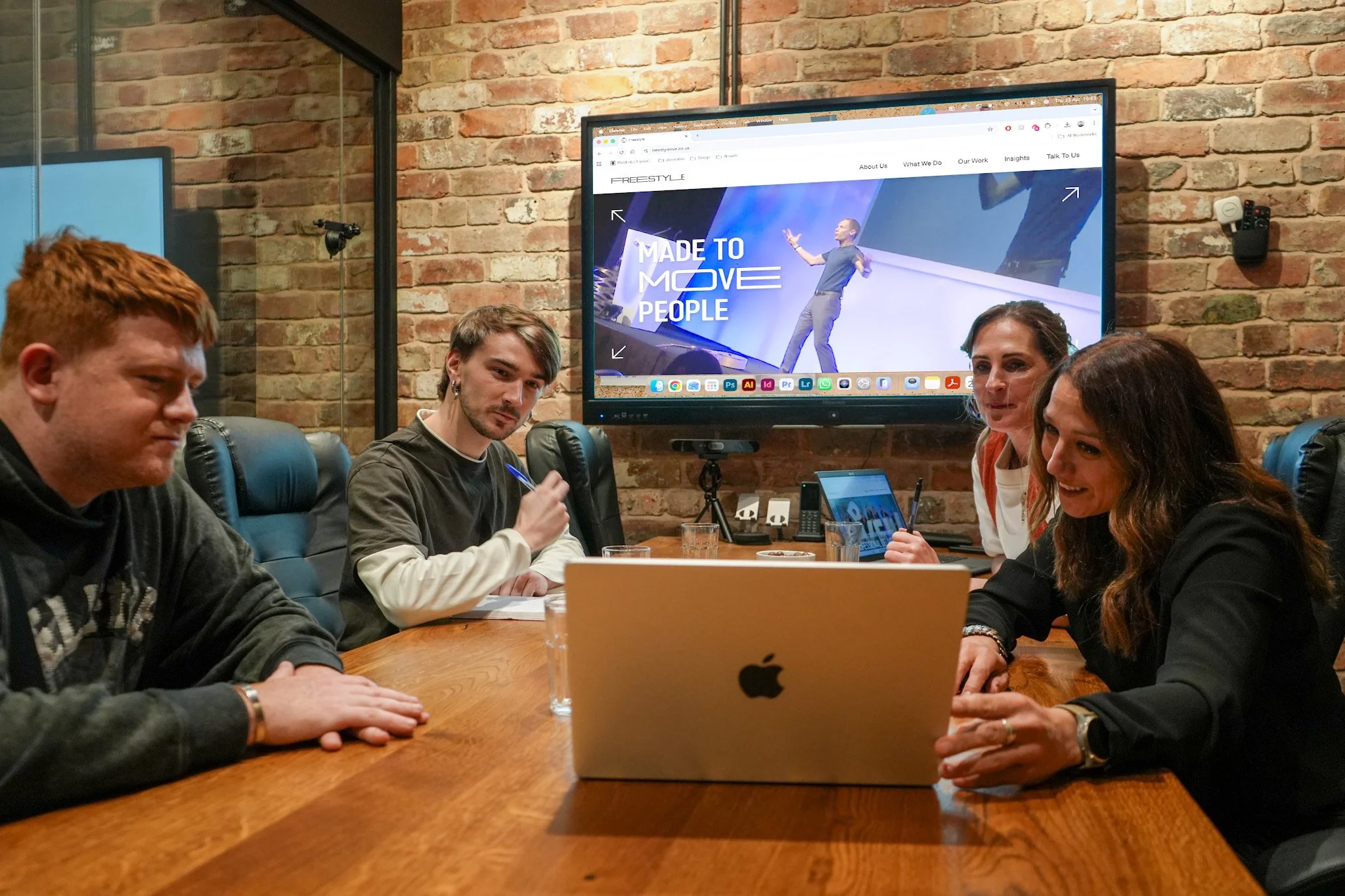
The most successful relationships are built on mutual fit, shared ambition and trust – and some of our strongest client relationships weren’t built from polished pitch decks. They began with working sessions and open discussions. With conversations before polished answers existed. With people sitting comfortably together, exploring ideas openly, asking better questions, challenging thinking constructively and figuring things out collaboratively rather than trying to perfectly predict one another from opposite sides of a briefing document.
Understanding whether those foundations exist should be a key part of the selection process, not something discovered after the contract is signed. Those moments often reveal far more than a beautifully designed slide deck or a perfect 'A-team' pitch ever could. You start to understand how people think. How they listen. How they challenge assumptions and respond when priorities evolve unexpectedly. Whether there is trust, chemistry and openness in the room. Events rarely happen in perfect conditions, and in an industry where timelines frequently move, priorities shift, budgets change and unexpected challenges are almost guaranteed, those qualities often become just as important as the ideas themselves.
And that part matters enormously. Because clients aren't simply selecting a concept; they're choosing a partner.
And as agencies, we should be doing the same. Pitching should never feel like a one-way street. We also need to question whether we're the right partner for the client. Can we dedicate our time, energy and people to the project in the way we believe clients deserve? Who within our team is genuinely the right person to lead the relationship? Are we the right fit for what they’re trying to achieve?
Those decisions feel every bit as important as winning the work itself.
Which raises an interesting question...
Could clients gain more value from seeing agencies show rather than simply tell?
Not through polished films or visually impressive case studies, but through collaborative workshops, brainstorming activities and active working sessions as part of the selection process. Sessions where ideas can be shaped together in real time rather than fully formed behind closed doors, and where the strongest thinking and partnerships are formed…
We also believe there is value in being braver earlier in the process.
More transparency. Smaller shortlists. Better conversations. More trust.
A profoundly subtle shift that would benefit all parties:
Greater transparency around objectives, budgets and constraints would allow agencies to develop more relevant, realistic solutions. Smaller, more focused shortlists would encourage deeper thinking rather than broader speculation. More collaborative sessions would help clients experience first-hand how potential partners think, respond and create in real time.
That doesn't simply reduce wasted effort for agencies. It gives clients more meaningful time with the partners they're genuinely considering, leading to stronger thinking, stronger relationships and, ultimately, better outcomes for everyone. Rather than rewarding the agency that can produce the most glossy work upfront, it creates space to assess the qualities that ultimately determine success: strategic thinking, creativity, adaptability, chemistry and collaboration.
None of this requires a complete reinvention of the agency selection or procurement process. It simply requires a more balanced approach. One where clarity comes earlier. Where deeper creative development is reserved for genuinely shortlisted partners. Where workshops and working sessions complement presentations. Where agencies are given enough context to do their best work, and clients gain richer insight into who they're actually choosing to work with. The result isn't just a fairer process. It's a more effective one. Clients receive thinking that is more informed, focused and practical. Agencies invest their expertise where it can create the greatest value. And both sides begin building the relationship long before a project officially starts.
In summary…
We don't think the traditional pitch process is broken, necessarily. But we DO think it's worth asking whether it's really the best we've got.
Every Industry evolves. Technology evolves. Expectations evolve. Ways of working evolve. And perhaps the pitch process should too.
The strongest partnerships rarely begin with performance alone. They tend to begin with conversation, openness, authenticity and a shared commitment to succeeding together. So if we can create a selection processes that encourage those qualities from the very beginning, everyone wins - clients, agencies and, ultimately, the work itself.
And if an industry built on creativity has stopped questioning one of its most established processes, perhaps that's the biggest opportunity of all…
We'd love to be part of that conversation.