
AI Is Everywhere. So What Do We Do With It?
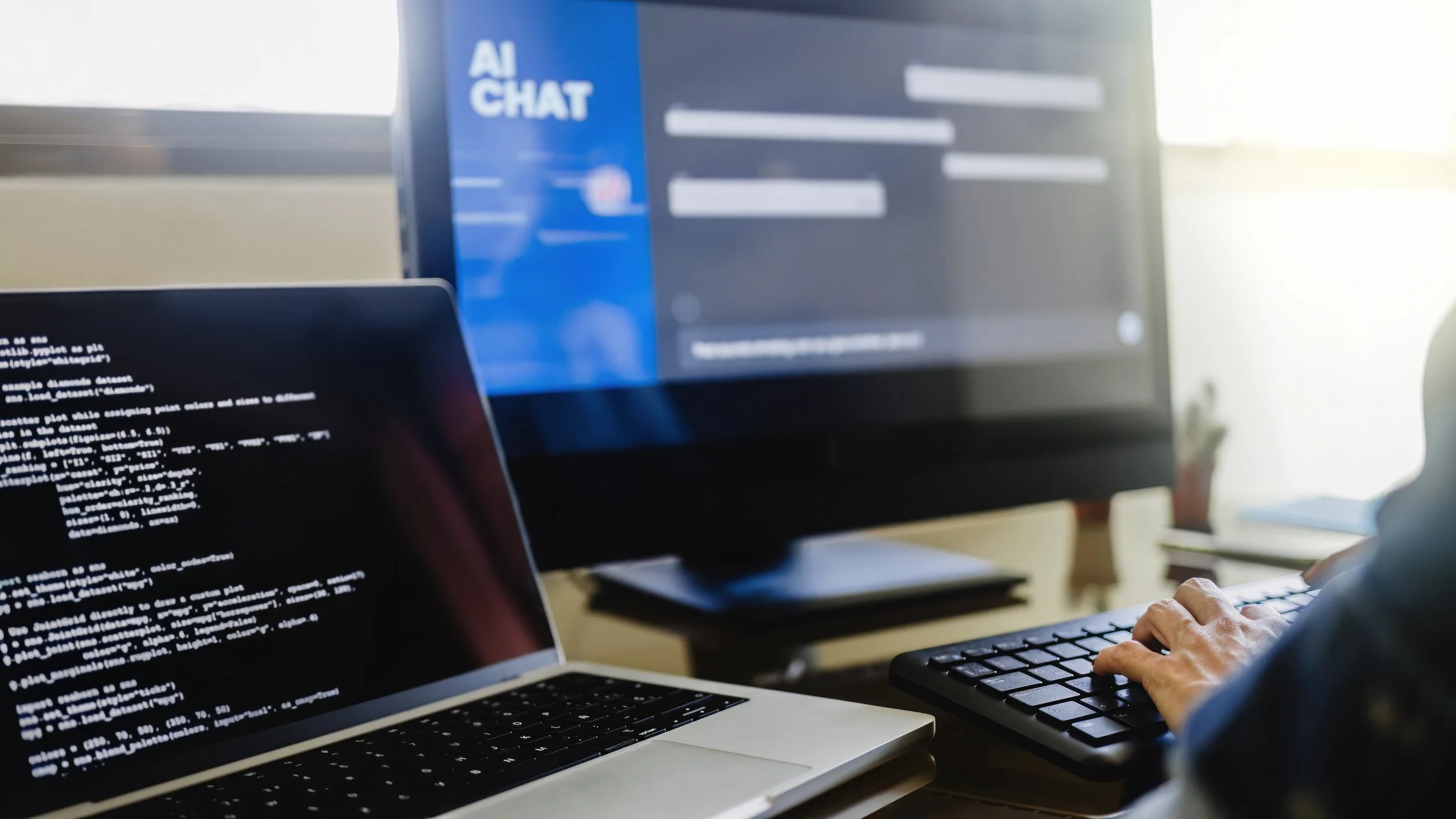
It’s hard to ignore how quickly AI has moved from something emerging to something expected.
Clients are asking about it, suppliers are building it into their offer, and conversations are full of it. In many ways, it has already become part of how we all work — capturing notes, analysing information, sense-checking ideas and speeding up processes. Quietly, and often without much discussion, it has woven itself into the day-to-day.
Which naturally raises a question.
What role should AI actually play in the work we do?
Because while the industry is starting to talk about AI as the next big shift, the reality is that we’re already in it. And if we’re only just beginning to define our position, we’re probably later to the conversation than we think.
For us, it isn’t about rejecting it, and it isn’t about leaning on it either. It’s about being clear on where it genuinely helps, and where it doesn’t.
There are areas where AI adds real value. It can improve efficiency, reduce manual effort and help us process information more quickly and clearly. Used well, it supports the work. It sharpens it. It creates space.
But there are other parts of what we do that feel different.
Creative thinking has always been a human process. It isn’t linear, and it certainly isn’t instant. It doesn’t come from a prompt. It comes from conversation, from sitting together and working something through, from stepping away and returning with a different perspective. It draws on experience, instinct and emotion. It comes from listening, questioning and, ultimately, from feeling.
That part of the process is harder to define, but it’s also where the work becomes meaningful.
Because we’re not just creating content. We’re creating moments that need to land with real people. Moments that build belief, shift thinking and stay with someone long after the event has finished.
And that kind of work can’t be rushed. It can be supported, but it can’t be replaced.
So rather than positioning AI as a headline, we see it as a tool. Something to use where it makes sense, and something to step away from where it doesn’t. Not as a shortcut to creativity, but as a way to support the process around it.
We know there are different approaches across the industry. Some are bringing AI to the forefront, positioning it as a differentiator — and that’s understandable. It’s new, it’s powerful and it’s evolving quickly.
For us, it’s less about how loudly we talk about it, and more about how thoughtfully we use it.
Quietly. Intentionally. Appropriately.
Because the value we bring has never come from the tools alone. It comes from how we think, how we work together and how we understand people. And ultimately, from how we design experiences that genuinely move them.
If AI helps us do that better, we’ll use it. If it doesn’t, we won’t.
And we’re comfortable with that balance.
If this resonates or challenges your thinking, we’d love to hear from you.
